
Living with a suddenly disabled dog
Life brings unexpected challenges sometimes, and living and rehabilitating a newly disabled dog was something I had to get used to and fast….
Reba, my soul dog was involved in a terrible accident when she ran out into the garden one evening and crashed dramatically into a tree, she suffered a spinal injury and was rushed to the vets. As a trainer I know a LOT about dogs but spinal injury in dogs was about to become my most frequently used google search…..
When you first get a dog, you think of all the wonderful walks and cafes you can hang out together in, and if you have a puppy your early research is all about toilet training, not pulling on the lead, getting a recall, understanding their body language and hopefully about teaching them to be home alone. One thing you never plan for is what to do after an accident, and how to rehabilitate a paralysed dog.
We don’t want to think about the worst, and we are in denial that anything bad will happen. This was me and I could not have predicted the freak accident that happened to Reba, my dog, late one October evening in 2024.
As soon as I let her out for her bedtime toilet, I had a sinking, suspicious feeling that something was wrong, so this is why I grabbed my shoes and torch and found her at the base of a tree, motionless and struggling to breathe. As I carefully scooped her up, I suspected a broken neck, and rushed her to the vets, who then immediately referred her to a specialist centre for urgent surgery. Ten days later, I was allowed to pick her up but I was not prepared for what lay ahead. The surgeon had promised that being a dog professional, she was in safe hands, but I’m a trainer, not a nurse!
All Reba could do was lift her head – she had no control of her toileting or holding her body up and the first weeks was one long blur of cleaning her, trying to hold her upright, comforting her and working out what I was supposed to do. We had physio exercises right from the start but I needed 2 hands just to hold her, another 2 hands to position her paws, and one more to feed her treats to encourage her. I stuffed a bag with old towels to use as a cushion under her body so that her toes just touched the ground which helped me do the exercises as it left a hand free to manipulate her legs. When living alone with limited help you learn to be creative – and rely on friends with suggestions too.
I didn’t sleep much, as not only had her separation anxiety returned after the trauma, she also became petrified of the dark. A new nightlight helped then but I was still up several times each night to clean up after her toilet accidents that she didn’t realise was happening.
The trauma affected me as well. It was a shock to find her, the worry if she would even live, and the physical and emotional demands of caring for her 24/7 were immense. I was also under financial pressure as I couldn’t work during this time. I kept a diary to help me process my feelings, but also to help me focus on what needed to be done practically to help her.
Not everyone would have done this, and I understand, but as Reba had a chance, I had to give this a go. She was determined too and the first time she threw herself around to change position and the time she raised herself up on her front paws to a sit was emotional. It was overwhelming when whilst on a client video call, she managed to get on all 4 paws to launch herself forward to her chew that had rolled away from her, brought me to tears. Not very professional but my clients also celebrated with me, none of us had a dry eye in that meeting afterwards.
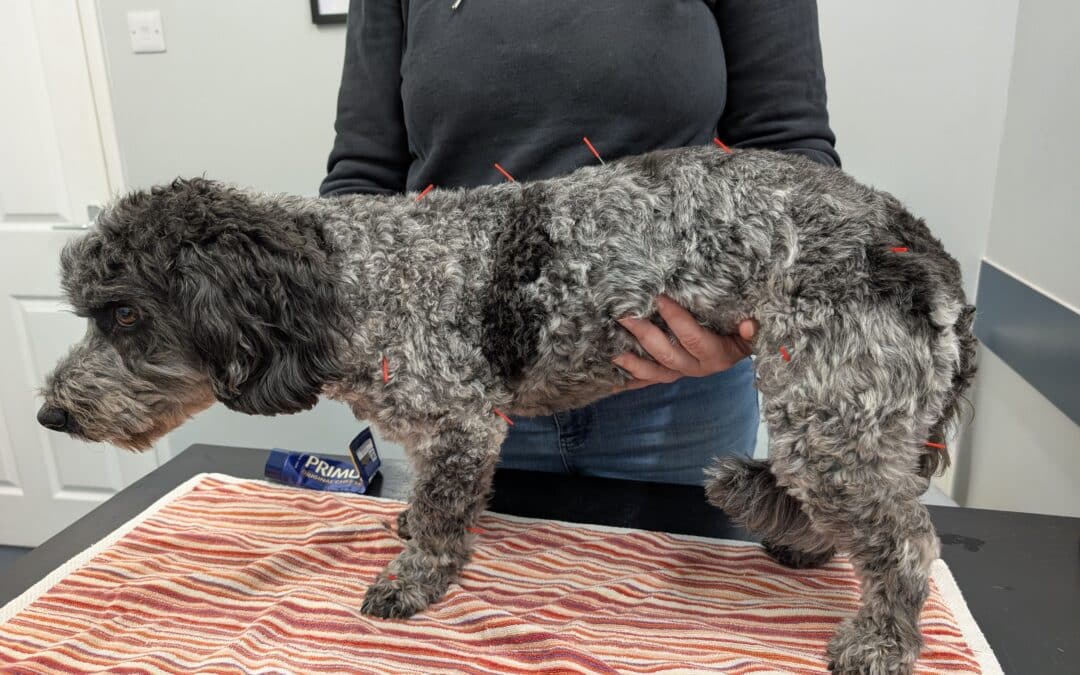
Our life became a constant round of caring, physio exercises, taking her to hydrotherapy, having the McTimoney practitioner here for a morning each week for treatments, and vet visits for medications and acupuncture. I had to adapt my home to cover all the ground floor with rugs, and even the patio had some (cheap!) faux grass to protect her nails from her scuffing paws.
In the early months, we had use of a buggy so we could still go out in the fresh air. Smells and enrichment are important to dogs, and the fresh air rejuvenated me too. Gradually she became more mobile, and refused to stay in the buggy so we started to go for 5 min walks, or hang out in car parks so she could be out and meet gentle dogs. I had to carry her up and down stairs, in and out of the car, and on/off any furniture. She was supervised all the time as one accident could be fatal.
Her progression was amazing, and after a few months, she found ways to be mobile by a bouncy canter type run. She struggles to manage to do any distance, and even now is limited to around 30 mins walk before she is too tired. I have grieved all the places we loved and can no longer visit, or do the things we enjoy. Exploring is out as she cannot go far and I have found this really upsetting. But adapting is what we have to do and her quality of life is important, I can always do the longer adventures another day on my own.
Reba will never be fully recovered, her injury was too dramatic however her therapies have reduced and she can now navigate stairs (carefully and supervised). She has remaining issues on her left side and limited feeling in one paw. Reba knows she cannot be as she was and moderates herself too, and I’m super impressed with her. We have to be careful forever around other dogs, as any jumps on her back or knocks to her neck will not be good, but at 11 years old, she’s no longer interested in zoomies play – sadly for me! She falls over a lot as her balance is not great (but improving even now), and I won’t trust her in water for this reason however we find other ways to have a fulfilling life – there is nothing wrong with her nose!
No-one can prepare you for what we have gone through, and every dog’s rehab journey can be different. We don’t want to think about our dogs getting hurt or disabled, whether it is from an accident or disease (many dogs are predisposed to spinal problems).
Maybe my dog training background had helped, as I revisited our old cues (toileting being one!) and this was useful for some physio exercises – turning left and touch, paws up and transitioning positions. What it has done is piqued my interest in movement, vet terminology and how this awareness can be beneficial for my clients. In the meantime, I published my diary so that other owners can read about the reality of rehabilitation of a disabled dog, or just follow a heart warming story with a happy ending.
You can buy my book One Paw At A Time from Green Cat Books publishers and Amazon.